
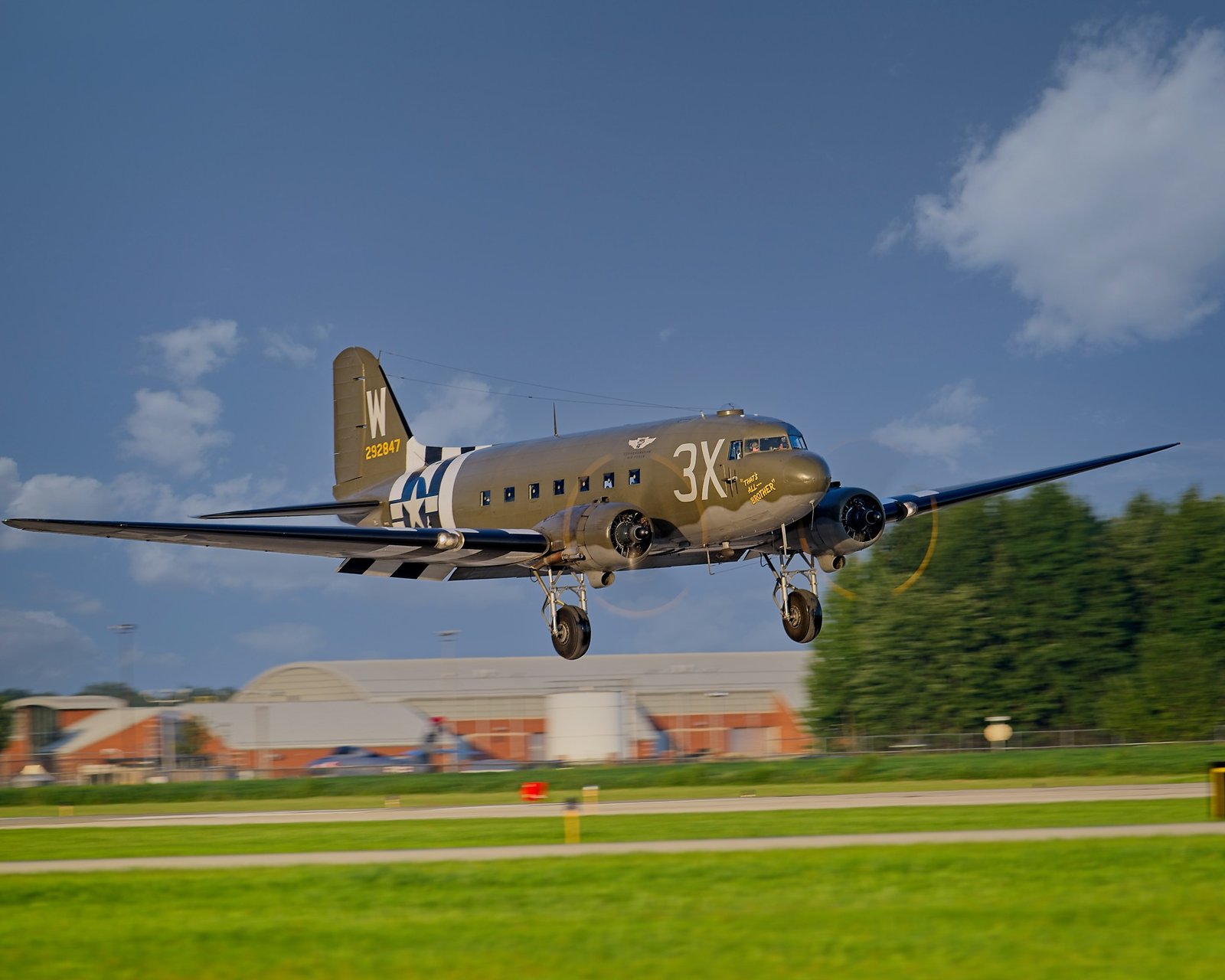
There are airplanes that belong to history.
And then there are airplanes that still carry history.
That’s All, Brother belongs in both categories.
Late on June 5, 1944, the C-47 lifted from Greenham Common, England, as the lead aircraft of Serial 7. Ahead lay Normandy. Around and behind her, the great stream of troop-carrier aircraft was forming—hundreds of C-47s carrying American paratroopers toward occupied France.
More than eighty years later, I climbed aboard.
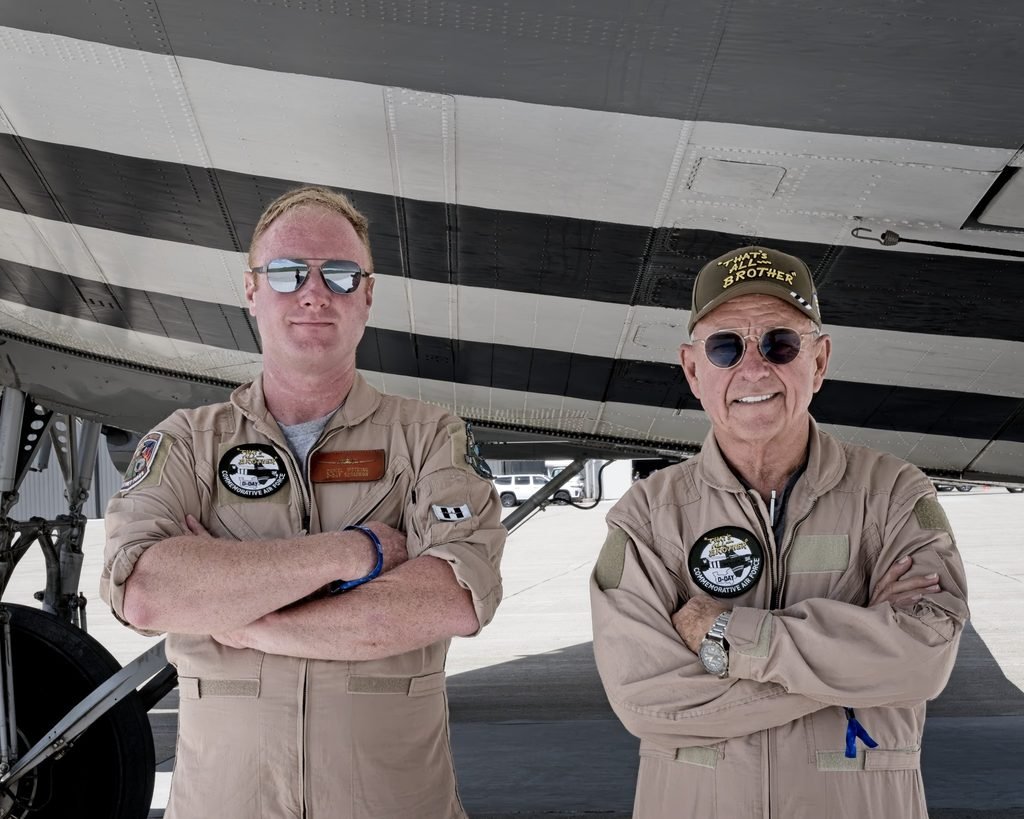
Up front were Daniel Wotring and Larry Lumpkin, the two pilots who would fly That’s All, Brother that morning.
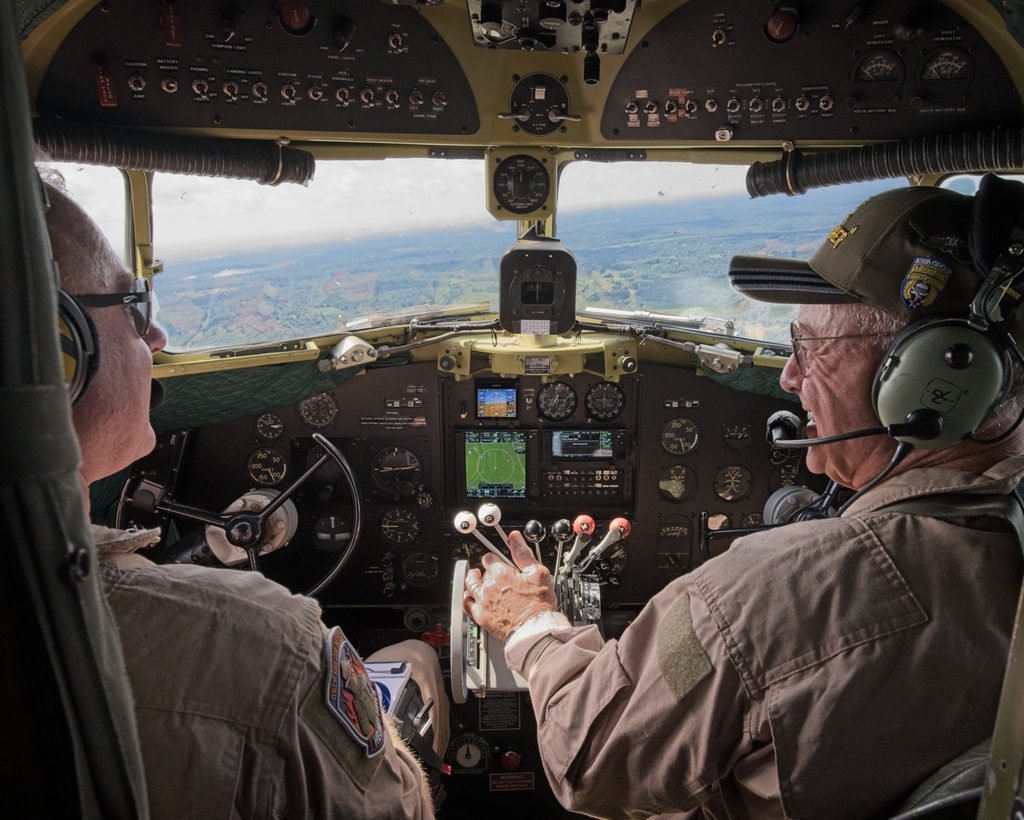
They share a cockpit and a conviction that this airplane ought to be flying.
But each arrives at that conviction from a slightly different direction.
Larry sees the C-47 through the long arc of aviation history.
He flew professionally for United Airlines and has been with the Commemorative Air Force for more than a quarter century, including time in the Mustang.
Yet the C-47 connects him to something that came before all of that.
The C-47’s story began with the Douglas DC-3—an airplane that helped establish the foundation of the modern airline industry.
Long before jets carried hundreds of passengers across continents and oceans, the DC-3 demonstrated that dependable scheduled passenger aviation could work.
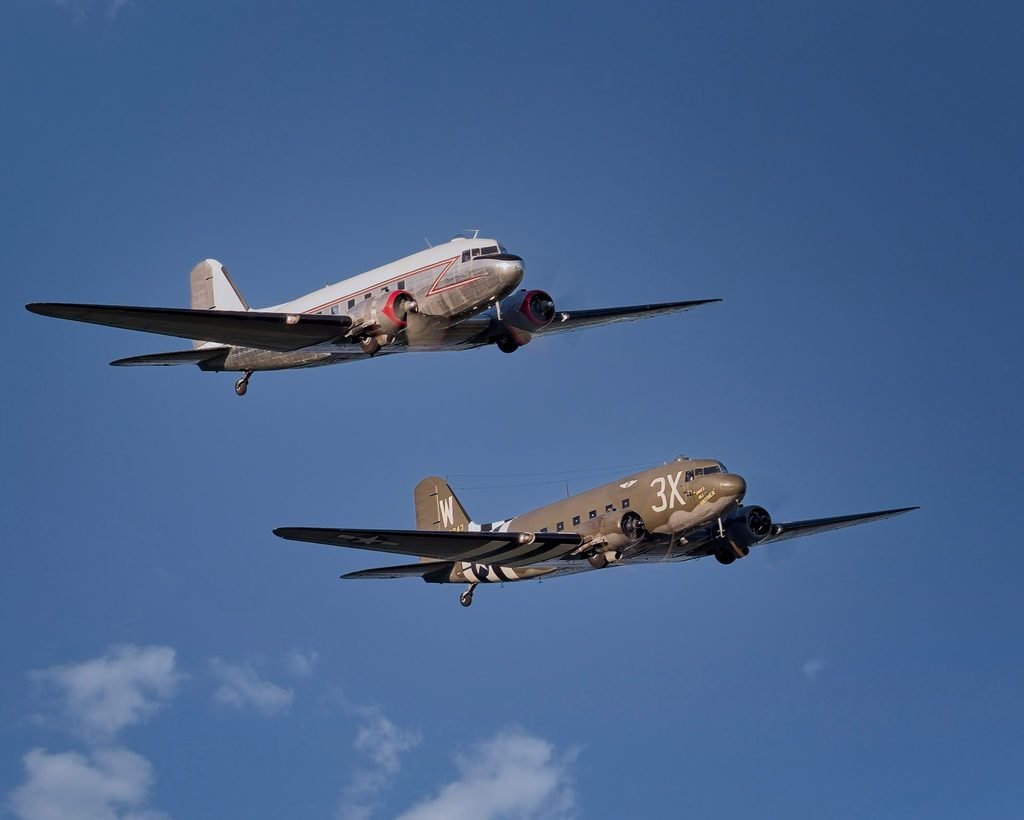
Then the world went to war.
The DC-3 design was adapted for military service. Passenger accommodations gave way to cargo doors, reinforced floors and military equipment.
The result was the C-47 Skytrain—an airplane descended from one that helped teach Americans how to travel, now built to carry Americans into war.
One of them was That’s All, Brother.
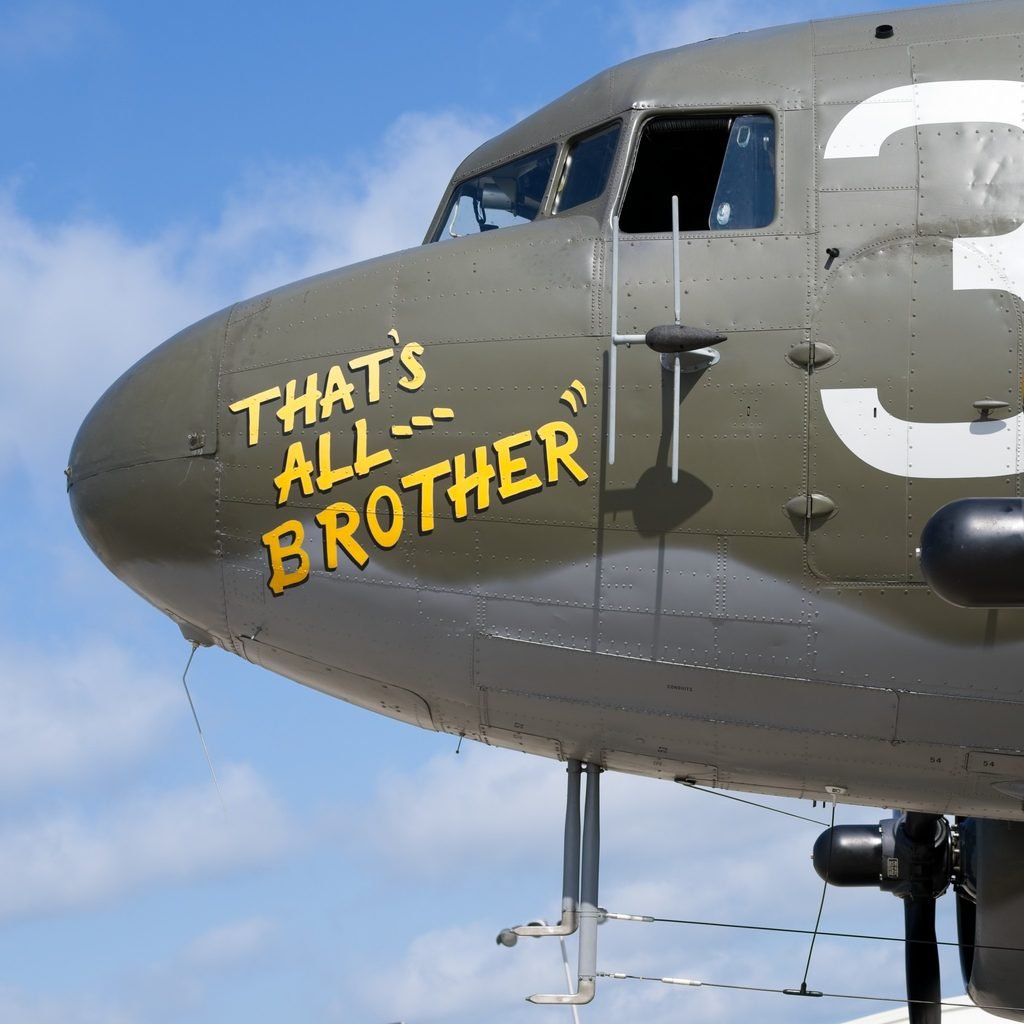
The name painted on her nose might sound almost playful today. Lt. Col. John Donalson, who named the airplane, intended it as a message to Adolf Hitler: the war had turned, and his time was running out.
That’s all, brother.
Your time is up.
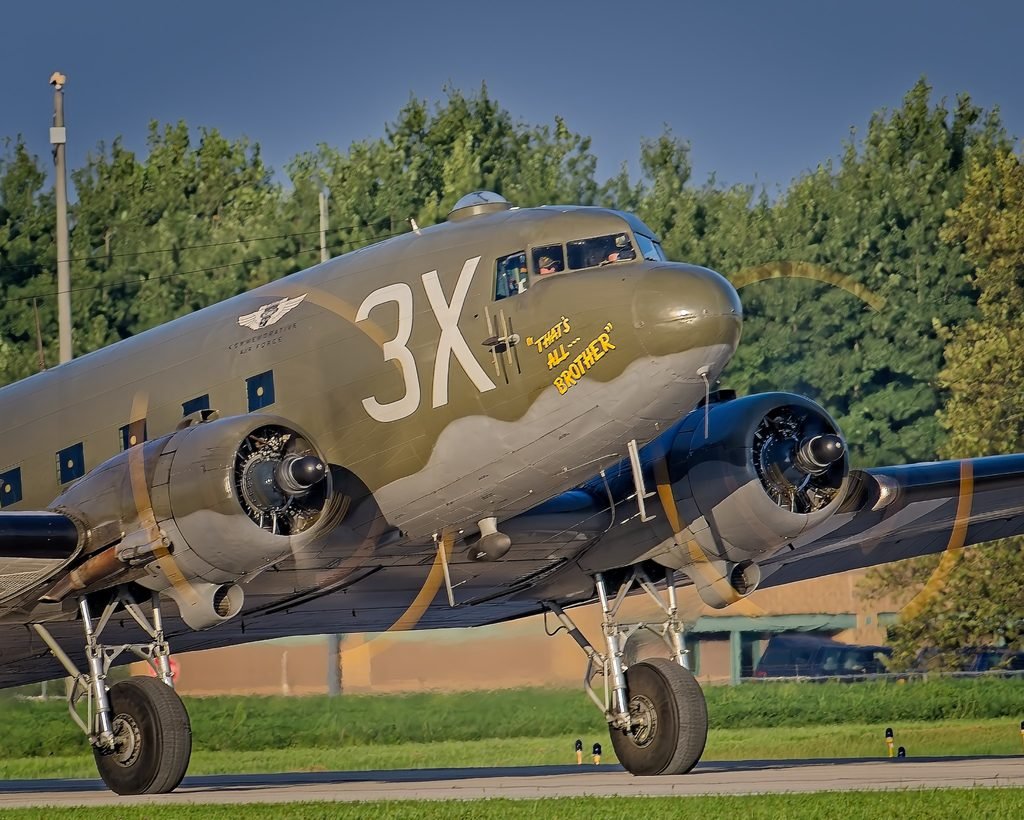
Late on June 5, That’s All, Brother lifted from England at the head of her formation. By the time she reached Normandy and the paratroopers went out the door, June 6—D-Day—had begun.
The men aboard were not passengers in the modern sense.
There would be no arrival gate.
They would leave through the door in flight.
More than eighty years later, much of the airplane they would recognize is still here.
That matters to Daniel.
When he settles into the cockpit of That’s All, Brother, he isn’t flying a modern airplane dressed to look old. The restoration is unusually faithful to the C-47 as it existed during World War II.
And that includes some things eighty years of aviation progress might have improved upon.
The instrument panel is a jumble.
The altimeter is partly hidden behind the control yoke.
Apparently, somewhere in the development of aviation, someone eventually decided pilots might like to see the instruments.
In That’s All, Brother, history won the argument.
The airplane also carries much of the additional equipment associated with its wartime configuration. Daniel says those extra antennas and other details create enough drag that it flies a little slower than some other surviving DC-3s and C-47s.
Authenticity, it turns out, costs a few knots.
But there is something else remarkable about the airplane.
Much of that restoration is still relatively fresh. The controls are exceptionally smooth, with little of the slack Daniel has come to expect from flying other vintage aircraft.
That’s All, Brother gives him something more rare: a sense of what a C-47 might have felt like when the airplane itself was young.
That matters because the purpose isn’t merely to preserve the airplane.
It is to preserve some connection to what happened inside it.
Larry talks about the mission in terms of education. When people see the C-47, he wants them to understand what these airplanes actually did—and especially what this particular airplane did on D-Day.
Daniel takes the idea one step further.
He borrows a somewhat wry description from his wife for museums filled with airplanes that no longer fly.
“Taxidermy zoos.”
But he is quick to acknowledge the important role those museums play. They preserve aircraft—and the history they represent—that might otherwise be lost.
What they cannot always preserve is the experience.
A silent airplane cannot give you the smell of oil.
It cannot give you the vibration of a radial engine.
It cannot give you the peculiar collection of noises made by an old transport airplane coming alive.
And it cannot carry you over Normandy.
That’s All, Brother can.
For the 80th anniversary of D-Day, That’s All, Brother returned to Europe.
Daniel was there to fly her.
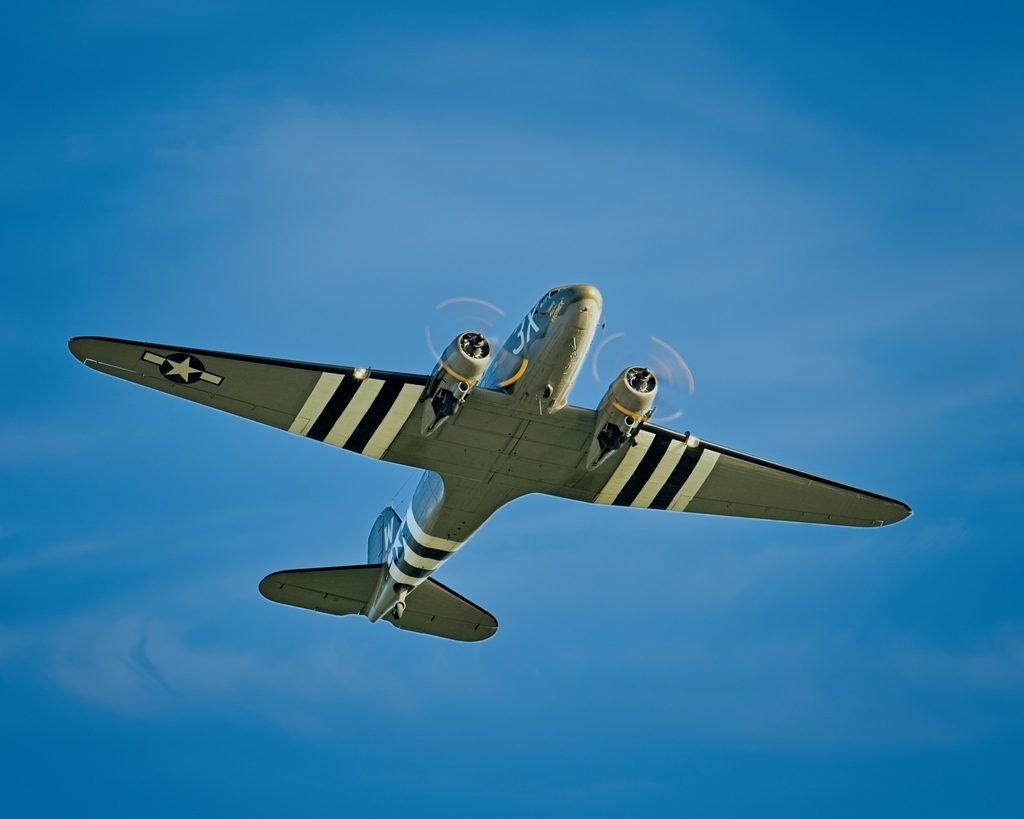
During the commemorations in June 2024, That’s All, Brother flew over Normandy with other C-47s, including fellow D-Day veteran Placid Lassie, and once again carried parachutists over the landscape where airborne troops had jumped eighty years earlier.
For Daniel, flying that coastline produced a moment no reenactment could have planned.
He remembers seeing the American cemetery below. He couldn’t simply pass it. He circled in salute.
And somewhere above that landscape came a realization that has stayed with him.
The first time That’s All, Brother crossed this coast, the men now buried below had still been alive.
Eighty years earlier, the airplane had approached Normandy carrying young men into war.
Now she had returned carrying their memory.
That is the difficulty with history.
We know how it ends.
They didn’t.
The young men aboard the C-47s that night knew only that somewhere ahead of them was occupied France. They carried parachutes, weapons and equipment.
They also carried whatever private thoughts a young man carries when he knows someone is about to open an airplane door and ask him to jump into a war.
One of those young men was my uncle.
His name was Paul.
He crossed the English Channel aboard a C-47 on D-Day and jumped into France.
He never came home.
I mentioned that to Daniel while we talked.
He understood immediately what that meant.
Men like Paul, he said, paid “the ultimate price for our freedom.”
For me, that changed the airplane a little.
I had climbed aboard because I wanted to photograph it and hear its story.
But somewhere between Larry explaining what the C-47 meant to aviation and Daniel explaining what it meant to fly one back over Normandy, the airplane became something else.
I began thinking about the people who had sat inside airplanes just like it.
The airplane is the part that survived.
Nearly all of the men they carried are gone now.
Perhaps that is why Larry and Daniel, approaching the C-47 from different directions, arrive at the same place.
Larry sees an airplane that helped build an industry and then helped win a war. Keeping it flying allows another generation to understand what it did.
Daniel sees something that cannot be fully understood while sitting silently behind a museum rope.
Both believe the airplane is valuable because it can still connect people with the lives that passed through it.
Especially children.
A child can read about D-Day.
He can learn the date.
He can memorize the names of the beaches.
He can be told how many airplanes crossed the Channel and how many paratroopers jumped from them.
Those things matter.
But put that child inside a C-47 and something changes.
Let him see how narrow the fuselage really is.
Let him look toward the door.
Let him hear the engines begin turning outside.
Let him smell the oil.
Let him feel the vibration come through the aluminum beneath his feet.
Then tell him that young men once sat along those walls at night, wearing parachutes and carrying rifles, waiting for a light to turn green.
The history hasn’t changed.
But perhaps the child has.
That morning, I had the privilege of discovering something of what Larry and Daniel meant.
I wasn’t crossing the English Channel.
There was no darkness outside the windows, no enemy territory ahead and no parachute strapped to my back.
It would be foolish to pretend that a ride at an airshow could reproduce even a fraction of what those young men experienced.
But it could make their world a little less abstract.
I could sit where men like them sat.
I could hear something of what they heard.
I could feel the airplane beneath my feet.
And up front, Larry Lumpkin and Daniel Wotring were doing what they believe matters most.
They were flying it.
After more than eighty years, That’s All, Brother still does what airplanes were built to do.
She leaves the ground.
And every time she does, she carries something more than passengers.
She carries the stories of the people who came before us.
People like my uncle Paul.
That is why Larry and Daniel believe in keeping her flying.
And perhaps it is why the rest of us still climb aboard.
The airplane is the part that survived.
The stories are what she carries now.
Stories of young soldiers and aircrews.
Of missions flown and lives changed.
Of those who came home.
And those, like my uncle Paul, who did not.
More than eighty years later, That’s All, Brother is still carrying those stories.
Perhaps that is the most important reason she still flies.
ABOUT THAT’S ALL, BROTHER
That’s All, Brother is operated by the Central Texas Wing of the Commemorative Air Force. The restored C-47 continues to fly as a living-history aircraft, offering the public opportunities to see—and even fly aboard—an aircraft that helped lead the airborne invasion of Normandy on D-Day. For information about the aircraft, its history, tour schedule and flight experiences, visit the official That’s All, Brother website.