
The Long
Way Home
An icy Tennessee winter, an unexpected purchase in Arizona, and a 1946 Piper Cub named Li’l Panda gave Grant Anderson a new way to pursue a lifelong dream of flight.
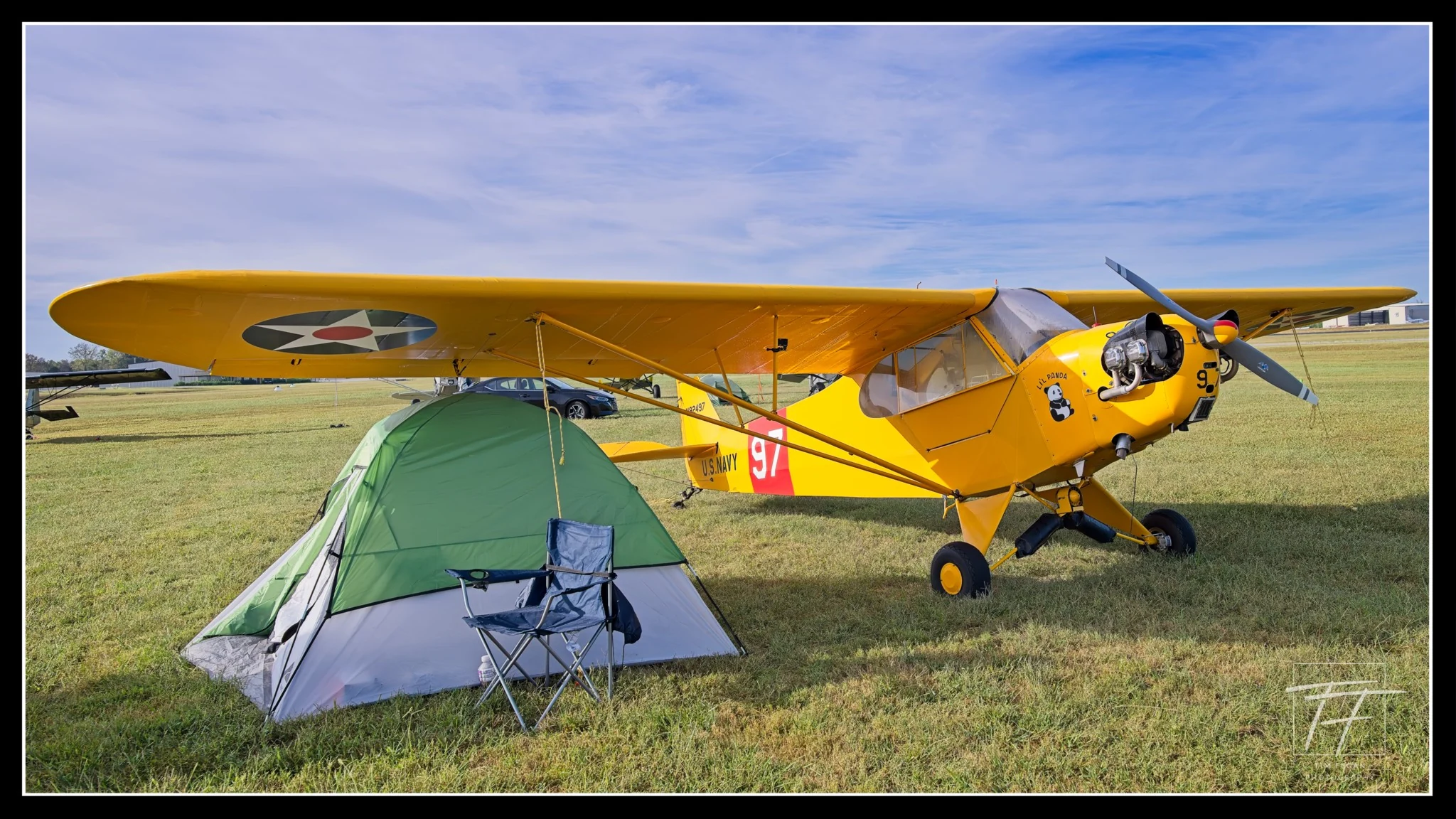
When Grant Anderson flew into Lebanon Municipal Airport for Music City STOL in October 2026, it was a milestone that might have seemed modest to an experienced pilot. The flight was about 66 miles, roughly an hour in his 1946 Piper J-3 Cub.
But it was Grant’s first solo cross-country flight away from his home airport, and the little airplane had already taken him on a far greater adventure.
There had been a broken ankle, an unexpected trip to Arizona, a pair of borrowed shoes that became part of an airplane purchase, and a weeklong journey across the country during which a Toyota Prius occasionally proved faster than the airplane.
And somehow, all of it had begun with an ice storm.
An Unexpected Beginning
In February 2026, an ice storm swept through Tennessee. Grant slipped, broke his ankle, and found himself facing surgery, a steel plate, eleven screws, and several months of recovery at home.
It wasn't exactly the beginning he had envisioned for an aviation adventure.
But being confined to home gave him something he hadn't had enough of before: time to think about flying.
Aviation had been part of Grant's life since childhood. His father worked for the Navy as a civilian for some forty years, and Grant grew up around the traditions and aircraft of naval aviation. Visits to the Naval Academy and the sight of the Blue Angels helped establish an interest that never really left him.
Eventually, Grant followed his own path into the Navy, serving four years as an avionics technician working on the Lockheed P-3 Orion. His assignments took him to California and Japan, keeping him close to aircraft even though he wasn't yet flying them himself.
After leaving the Navy, Grant began a rewarding career in financial services that has spanned more than twenty years. That journey eventually brought him to Merrill Lynch, where he now serves as a wealth advisor in Nashville.
The airplanes remained an interest, but the years went by.
Then came the ice storm.
During his recovery, Grant began taking flying lessons and looking through airplane listings. He had considered another vintage aircraft, but that opportunity disappeared before he could purchase it.
His search eventually brought him to an advertisement for a 1946 Piper J-3 Cub in Bullhead, Arizona.
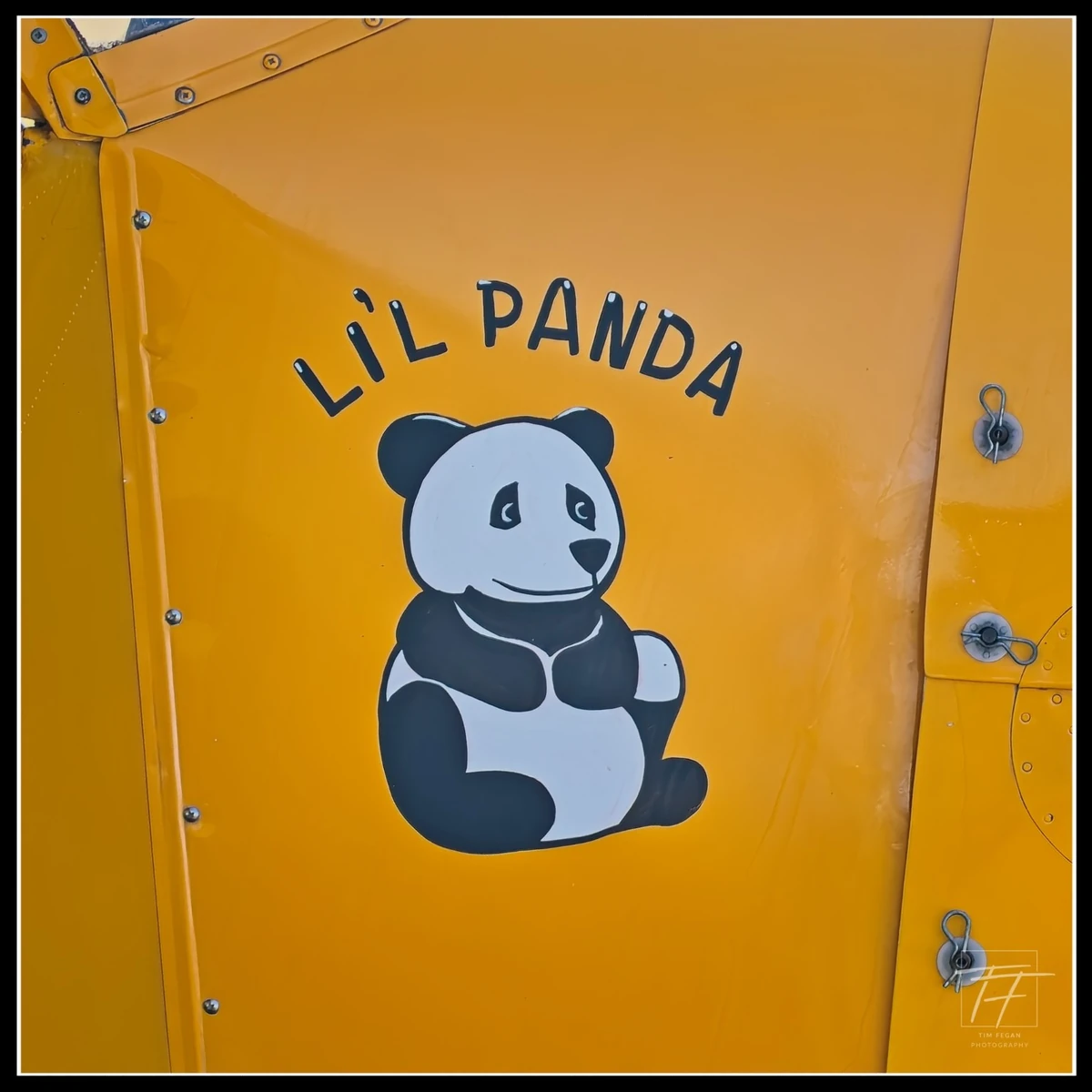
Its name was Li’l Panda.
A Cub and a Pair of Shoes
Grant traveled to Arizona to see the airplane, aware that another prospective buyer was also interested.
For someone with just three hours of flight instruction and no tailwheel experience, buying a nearly eighty-year-old Cub was an ambitious decision.
The J-3 is an airplane from another era. Its narrow cabin, tandem seating, simple controls, and modest power make it a wonderfully direct flying machine. But its conventional landing gear demands skills different from those required by the tricycle-gear trainers most modern students encounter.
Even sitting in the cockpit presented Grant with an unexpected problem.
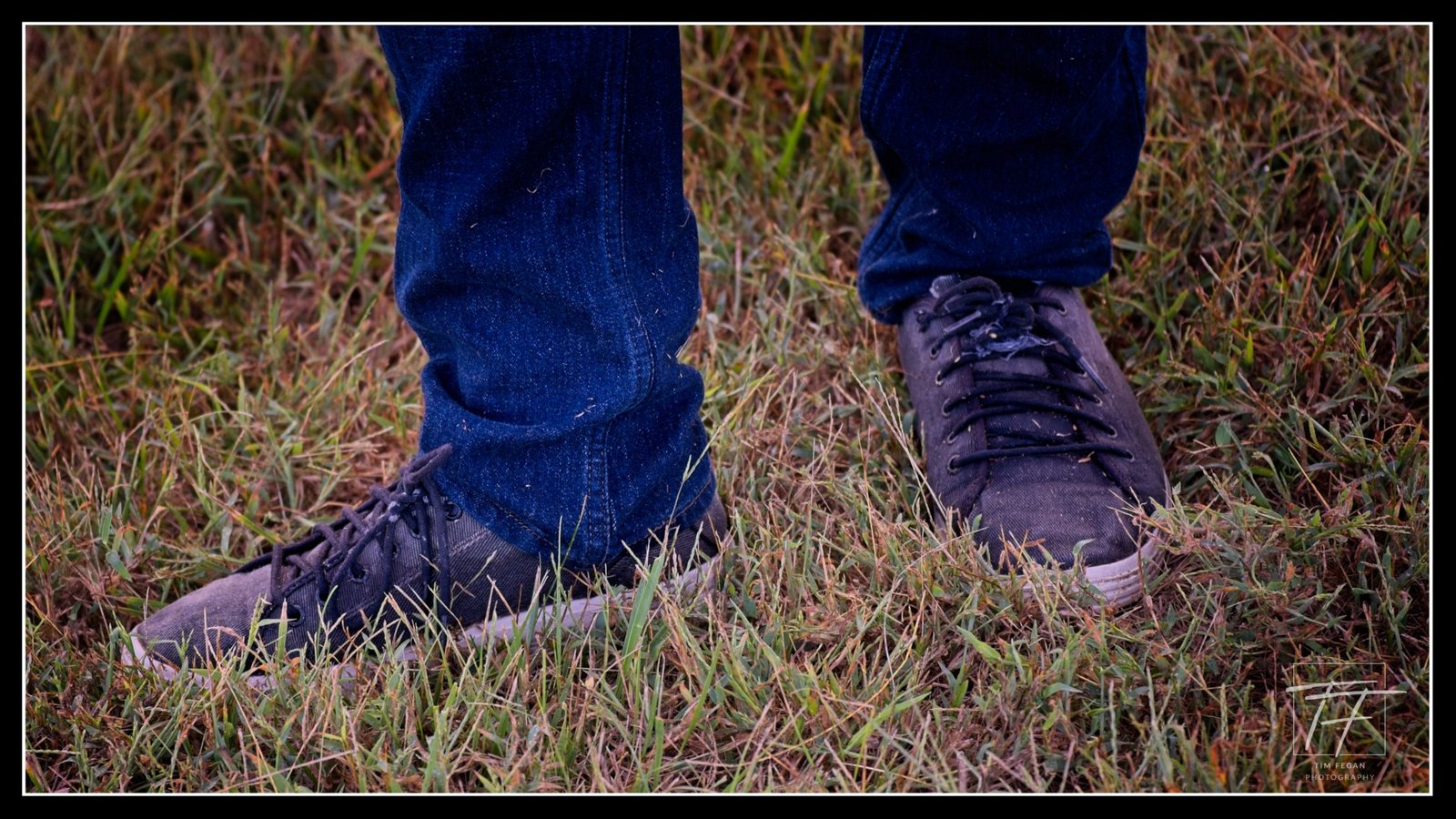
His shoes were too bulky to work comfortably with the Cub's rudder pedals.
The seller, wearing shoes better suited to the cramped cockpit, suggested that his were just what Grant needed.
Grant found a solution that was both practical and memorable.
“Give me your shoes and…you got a deal.”
The shoes became part of the transaction.
Grant still wears them.
An airplane purchase involving an exchange of footwear might seem unusual, but very little about this adventure was going to follow the conventional script.
A Little Airplane with a History
Li’l Panda, registration N92497, already had a story of its own long before Grant entered the picture.
In 2001, a group of aviation enthusiasts associated with the Commemorative Air Force's 3rd Pursuit Squadron acquired the Cub from Washington state and brought it to Southern California.
According to an account published in Pacific Flyer in September 2005, the airplane required far more work than its new owners initially expected. What began as the acquisition of a relatively simple tailwheel aircraft became a substantial restoration effort.
The project occupied several years, culminating in a return to flight on March 20, 2005, at Cable Airport in Upland, California.
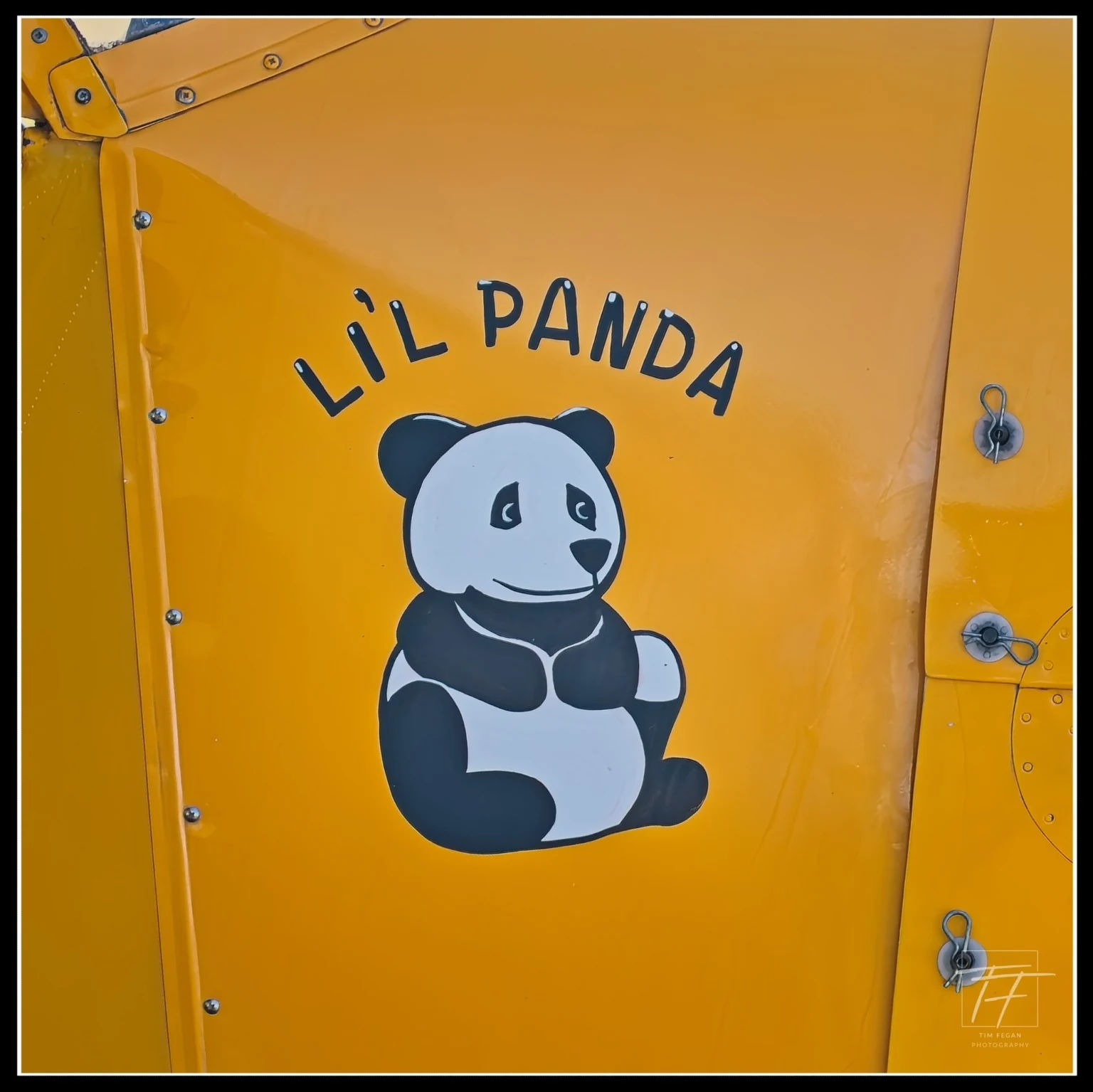
The Cub's unusual name came from its much larger hangar companion, an Antonov An-2 known as Big Panda. Beside that enormous biplane, the small Piper naturally became Li’l Panda.
There was a purpose behind the restoration beyond returning another historic aircraft to the sky.
The men involved wanted an approachable tailwheel airplane in which to develop flying skills before moving into more demanding vintage aircraft and warbirds.
Years later, without having been part of that earlier effort, Grant would choose the very same airplane for remarkably similar reasons.
His ultimate ambition is to fly a ScaleWings P-51 Mustang replica. But he recognized that mastering an airplane of that kind would require preparation, particularly experience with tailwheel handling.
“I knew I had to take baby steps, and the little Panda was just the ticket.”
The Cub had once helped another group of aviators work toward flying larger, more challenging aircraft.
Now it was beginning that work again.
The Long Way Across America
Buying Li’l Panda in Arizona was one thing.
Getting it home to Tennessee was quite another.
Grant enlisted the help of Ian Whitaker of Bullhead Flight Training in Arizona, who accompanied him on the long flight east and helped him become familiar with the airplane. He also benefited from the guidance of a local aviation mechanic named Bill, who helped evaluate the Cub before departure and remained a source of advice during the journey.
Both men became important parts of an experience that Grant would remember for far more than the miles traveled.
At the beginning of the trip, Grant had accumulated only about three hours of flight instruction. He had never flown a tailwheel airplane.
Now he was preparing to cross a substantial portion of the United States in one.
The journey took approximately a week.
For an airplane that cruises at around 70 miles per hour, crossing the country is not an undertaking measured simply in flight hours. Weather, fuel stops, changing winds, and the limits of both pilot and machine determine the pace.
Storms complicated the journey, forcing patience and changes of plan.
And patience, as Grant discovered, is a necessary traveling companion in a Piper Cub.
At times, their route paralleled the highway. With a substantial headwind, the airplane's progress over the ground could become almost comically slow.
“The Prius was passing us.”
He laughed about the persistent winds, joking that there seemed to be no such thing as a tailwind.
But on occasions when the wind finally favored them, Li’l Panda could manage a groundspeed approaching 90 or even 100 miles per hour.
The same airplane that sometimes struggled to keep ahead of highway traffic could suddenly cover the landscape at a decidedly more satisfying pace.
The crossing was more than a delivery flight.
It was an extended introduction to the realities of flying: learning the airplane's responses, watching the weather, making decisions, managing fuel and distance, and understanding that arriving safely matters more than arriving quickly.
For Grant, every leg added experience that no amount of reading about aviation could provide.
By the time Li’l Panda reached Tennessee, he had traveled a remarkable distance from the man who had first climbed into its cockpit in Arizona.
The airplane had made it home.
And Grant was becoming a pilot.
Sixty-Six Miles
In October, Li’l Panda appeared at Music City STOL at Lebanon Municipal Airport, surrounded by aircraft and pilots whose specialties included getting off the ground and back onto it in remarkably short distances.
The J-3 was not there to make an impression through speed, horsepower, or sophisticated equipment.
Its appeal was something different.
Here was a straightforward little airplane built in 1946, still doing what generations of Cubs have done: teaching people to fly.
For Grant, the trip to Lebanon represented another important first.
After traveling across the country with Ian beside him, he had now made a cross-country flight on his own.
The distance was small compared with the journey from Arizona, but its significance was considerably greater.
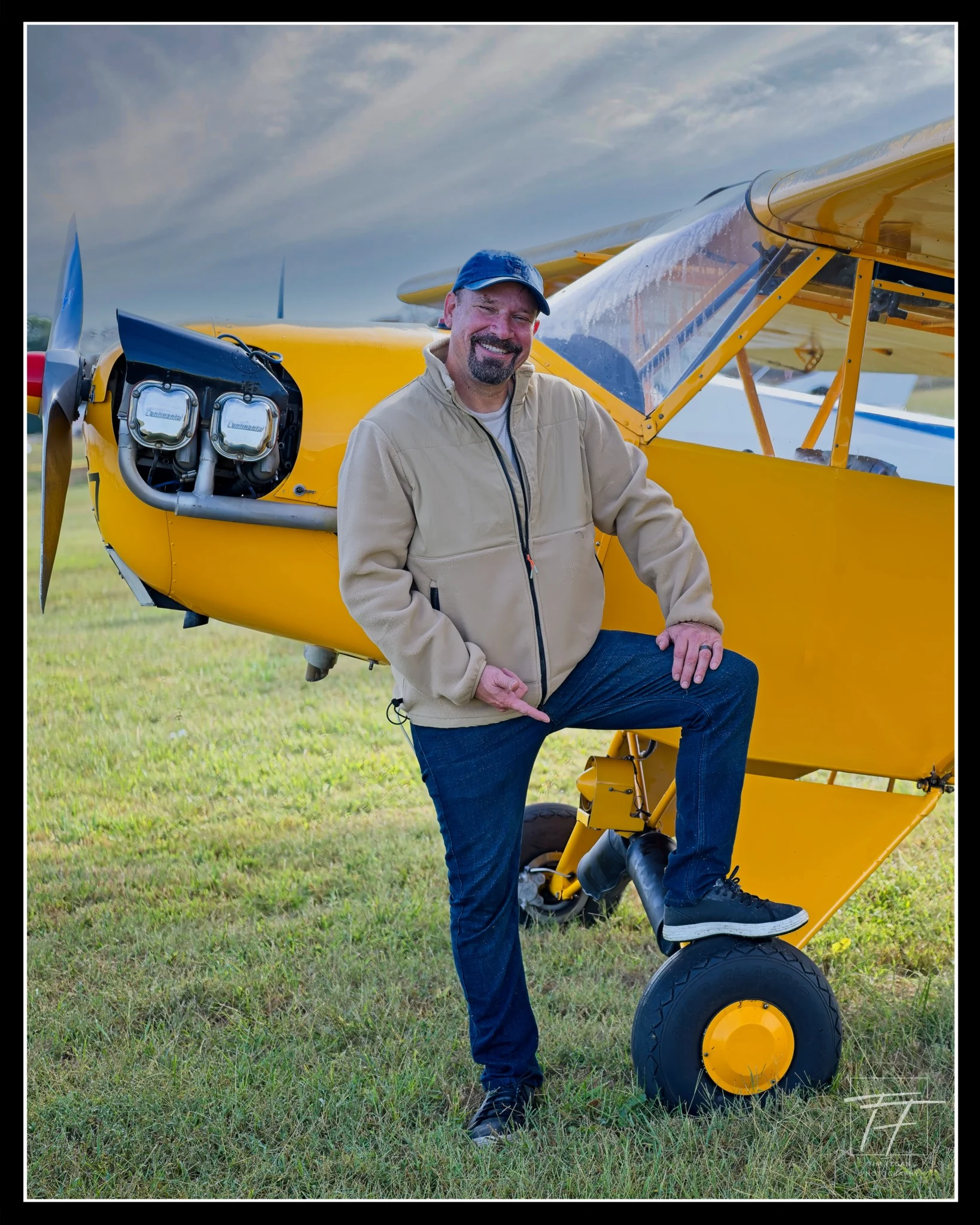
The airplane had become more than something he owned.
It was something he was learning to command, with the judgment and responsibility that comes with flying alone.
“Once I did that, it was like, well, where can’t you go? You just gotta be patient ’cause it’s gonna take you a while.”
There is something wonderfully appropriate about that observation coming from the owner of a Piper Cub.
The aircraft has little interest in hurrying anyone.
It rewards patience, attention, and an appreciation for the journey itself.
A Flight Yet to Come
For all the adventures Grant has already experienced with Li’l Panda, one of the flights he looks forward to most has little to do with the airplane's performance.
It has to do with his father.
Grant's parents live in Random Lake, Wisconsin, not far from Sheboygan. His father's long career with the Navy helped introduce Grant to aviation, and the airplanes he watched as a boy became part of a lifelong fascination with flight.
Now, after decades spent pursuing other responsibilities and careers, Grant has an airplane of his own.
And he wants to fly it to Wisconsin.
Not simply to land at another airport or add another destination to his logbook, but to fly over his father's home.
“It’d be cool to be his son and fly a plane over the house.”
It is a wonderfully uncomplicated ambition.
A son who grew up watching airplanes, whose father helped give him that connection to aviation, now hopes to become the pilot of an airplane passing overhead.
There may be faster and more practical ways to travel from Tennessee to Wisconsin.
But practicality has never been the whole point of owning a Piper Cub.
From a broken ankle in Tennessee to an airplane purchase in Arizona, from a week of unpredictable weather to a first solo cross-country flight, Grant Anderson has already discovered that flying can take a person places he never expected.
And Li’l Panda, the little Cub that once helped a group of aviation enthusiasts prepare for bigger airplanes, is still helping someone pursue a dream.
The P-51 may come someday.
For now, there is another destination waiting in Wisconsin.
And when Grant finally flies over his father's house, the distance traveled will mean considerably more than the miles recorded in his logbook.
Sometimes, the long way home is the one worth taking.